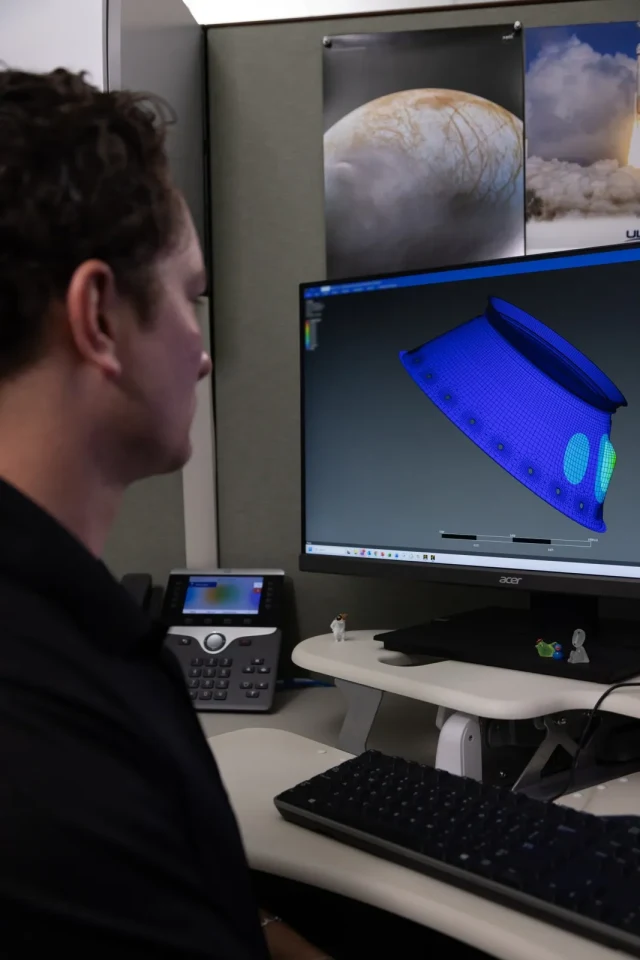
Feature · Science / TechnologyNASA Experimental Mars Helicopter Blade Designs Target Longer FlightsNASA researchers are developing the future of flight on Mars, laying the groundwork for helicopters with the ability to fly higher and farther while conducting science on the Red Planet. Using high-fidelity computer simulations and wind tunnel tests, engineers are reimagining the rotorcraft blades that could carry the next generation of Mars flyers.Read the full story →Arezu Sarvestani · October 20, 2026 at 12:02 PM
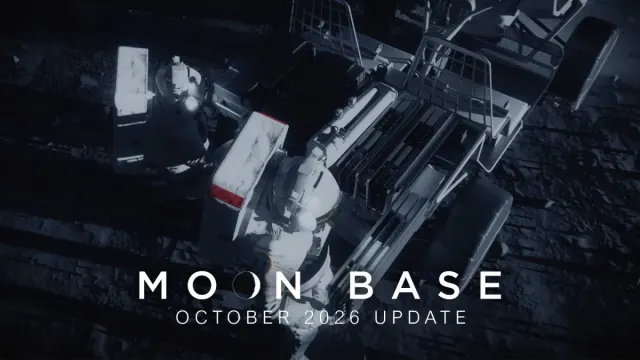
Feature · Science / TechnologyNASA Provides Progress Update on Moon Base RoversAs NASA works to build the Moon Base, crewed and robotic lunar rovers will play a crucial role during early development through technology demonstrations, astronaut transport, terrain mapping, scientific investigations, and resource prospecting. Data from these early missions will inform future mobility systems and infrastructure needed for astronauts to live and work on the Moon. […]Read the full story →Victoria Ugalde · October 20, 2026 at 11:00 AM
Feature · Science / TechnologyWebb Captures Stellar JetsAn image from NASA’s James Webb Space Telescope released on Oct. 6, 2026, reveals a cauldron of cosmic creation. Webb has unveiled numerous stars formerly hidden by clouds of dust in a stellar nursery known as NGC 7129, which resides about 3,300 light-years from Earth. Learn more about this region – and tour it in […]Read the full story →HQ Web Team · October 20, 2026 at 10:44 AM
Feature · Science / TechnologyNASA Welcomes Uzbekistan as Newest Artemis Accords SignatoryThe Republic of Uzbekistan became the 77th signatory of the Artemis Accords during a ceremony in Samarkand on Monday, committing to the practical principles that guide safe, transparent, and responsible civil space exploration. “Uzbekistan joins the Artemis Accords at a pivotal moment,” said NASA Deputy Administrator Matt Anderson. “President Trump has directed NASA to build […]Read the full story →Elizabeth Shaw · October 20, 2026 at 10:21 AM
Feature · Science / TechnologyNASA Improves Shock, Vibration AnalysisRockets vibrate, shake, and flex intensely as they climb into space, and spacecraft packed with delicate scientific instruments must survive those forces. Before any rocket leaves the ground, NASA engineers work to predict how those stresses will affect every part of a spacecraft. To do that, engineers in the Dynamic Environments Group with NASA’s Launch […]Read the full story →Elyna Niles-Carnes · October 19, 2026 at 3:28 PM
Feature · Science / TechnologySoftwareResearch teams at NASA’s Glenn Research Center are involved in developing theory and software to predict the noise from aircraft engines. This software helps engineers to design and analyze new and improved aircraft propulsion systems. Copies of our software can be requested from NASA’s Software Catalog. JeNo Development of jet noise prediction codes is multifaceted. […]Read the full story →L. Danielle Koch · October 19, 2026 at 2:11 PM
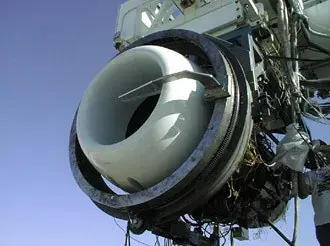
Feature · Science / TechnologyExperimental FacilitiesResearch teams at the NASA Glenn Research Center perform experiments in world-class facilities such as the 9- by 15-Foot Low-Speed Wind Tunnel (9 x15 LSWT), the Aero-Acoustic Propulsion Laboratory (AAPL), the Small Hot Jet Acoustic Rig (SHJAR), the Nozzle Acoustic Test Rig (NATR), the DGEN AeroPropulsion Research Turbofan (DART), and the Acoustical Testing Laboratory (ATL). […]Read the full story →L. Danielle Koch · October 19, 2026 at 2:08 PM
Feature · Science / TechnologyNASA’s Simulated Mars Crew Marks One Year Inside HabitatThe four crew members in NASA’s simulated Mars mission have spent the past year living and working in isolation in a confined habitat at NASA’s Johnson Space Center in Houston.Read the full story →Abby Graf · October 19, 2026 at 2:01 PM
Feature · Science / TechnologyInstrumentationTo measure airflow and sound, research teams at the NASA Glenn Research Center use special instrumentation like particle image velocimetry, hot wire anemometry, Raman spectroscopy, microphones in phased arrays or continuously rotating rakes. The global aviation noise reduction community relies on data from NASA GRC experiments to validate theory and noise prediction software. Rotating Rake […]Read the full story →L. Danielle Koch · October 19, 2026 at 12:37 PM
Feature · Science / TechnologyMartian DawnNASA’s Curiosity captures the dawn on Mars – as well as elongated ridges formed by wind erosion, or yardangs – in this close-up from a panorama released on Oct. 6, 2026. This is the most detailed view yet of distant, wind-carved Martian cliffs, highlighting features the mission’s scientists have long been waiting to see up […]Read the full story →HQ Web Team · October 19, 2026 at 12:03 PM
Feature · Science / TechnologyArtemis II Heat Shield After SplashdownShortly after NASA’s Artemis II mission splashed down on April 10, 2026, U.S. Navy divers captured underwater imagery of the Orion spacecraft’s heat shield. In the months after, the agency measured whether the thermal protection system effectively safeguarded the crew and Orion systems as the spacecraft reentered Earth’s atmosphere. This rigorous analysis confirmed that the […]Read the full story →HQ Web Team · October 16, 2026 at 12:28 PM
Feature · Science / TechnologyI Am Artemis: Allison MjoenAs the supercooled propellant flowed into the core stage, and NASA’s SLS (Space Launch System) rocket roared to life, Allison Mjoen and her family watched with awe and pride. Mjoen, NASA’s operations manager for the agency’s Exploration Ground Systems Program, helped shape the systems and ground operations that will one day send humans back to […]Read the full story →Jason Costa · October 16, 2026 at 10:24 AM