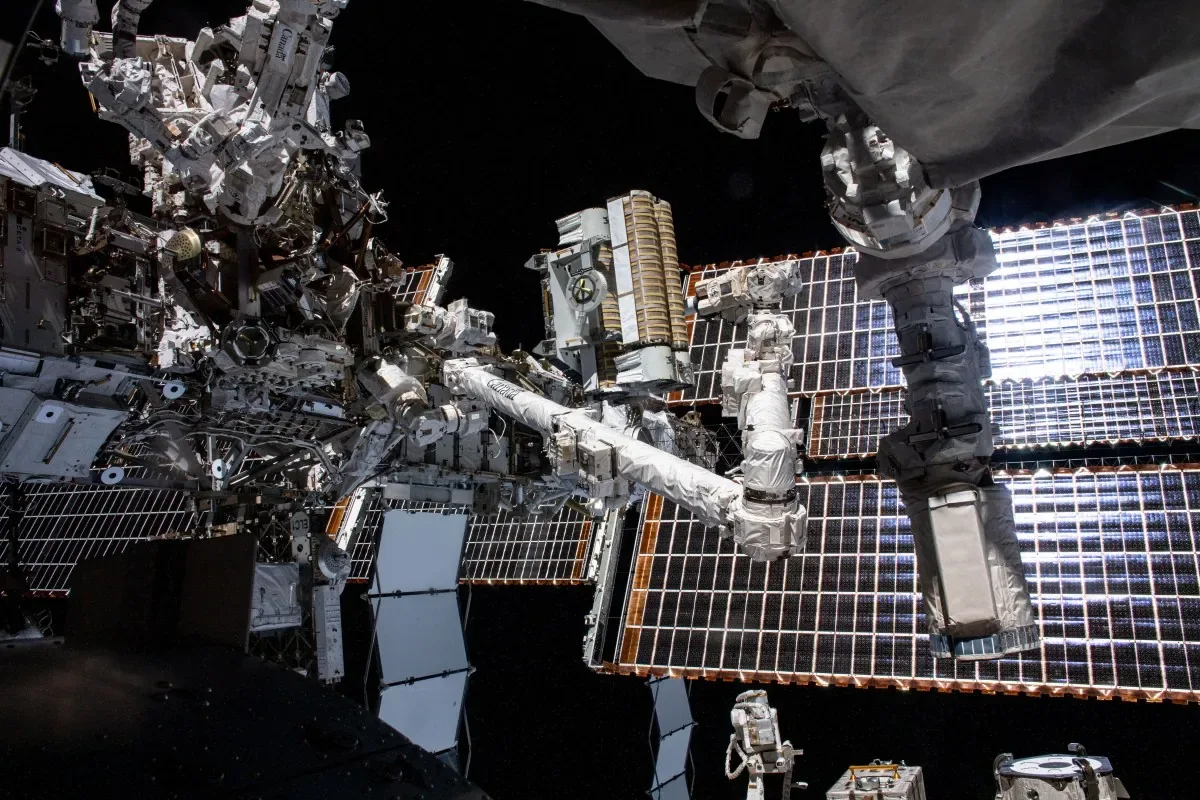
Feature · Science / TechnologyPower Up: Roll Out Solar Arrays Boost Space Station Power SupplyFrom the International Space Station’s unique position 250 miles above Earth, the Sun is a vital source of energy. Solar power supports the station’s life support systems, daily activities, and hundreds of research investigations that improve life on Earth and prepare humans for deep space exploration. Over the past five years, NASA augmented the station’s […]Read the full story →Penelope Lauren Garcia-Galan · October 15, 2026 at 1:30 PM
Feature · Science / TechnologyNASA Awards Enable Research, Technology to Build Future WorkforceNASA has selected 12 U.S. institutions to receive $12 million to accelerate academic research and technology development in support of the agency’s priorities for exploring the Moon, Mars, and deep space. Through NASA’s Minority University Research and Education Project (MUREP) Space Technology Artemis Research (M‑STAR) initiative, selected institutions will each receive up to $1 million […]Read the full story →Sandra May · October 15, 2026 at 11:57 AM
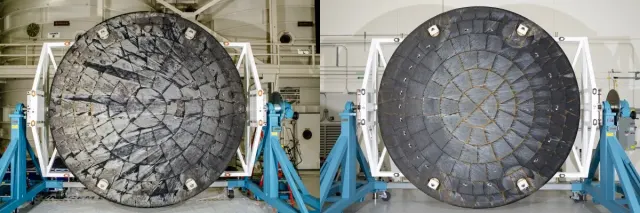
Feature · Science / TechnologyRigorous Analysis Confirms NASA’s Artemis II Heat Shield PerformanceNASA’s Artemis II mission sent four astronauts around the Moon and brought them safely back to Earth, laying a foundation for crewed flights to the Moon’s surface. Additional engineering data analysis of the Orion spacecraft’s heat shield confirmed initial data showing the heat shield performed as expected. In particular, NASA measured whether the thermal protection […]Read the full story →Elyna Niles-Carnes · October 15, 2026 at 10:57 AM
Feature · Science / TechnologyChandra Finds Possible Origin of ‘Treble Clef’ WavesA formation of radio waves looks remarkably like a treble clef in this Oct. 14, 2026, image from NASA’s Chandra X-Ray Observatory. Researchers used Chandra to find that the Treble Clef is likely caused by an outburst from a supermassive black hole, followed by a collision of two galaxy clusters. Read more about this discovery. […]Read the full story →HQ Web Team · October 15, 2026 at 10:19 AM
Feature · Science / TechnologyNASA Astronauts to Answer Questions from Florida StudentsEditor’s Note: This article was updated Thursday, Oct. 15, 2026, to reflect a change to the event start time. Students in Florida will hear from NASA astronauts Jessica Watkins and Luke Delaney as they answer prerecorded STEM questions while aboard the International Space Station. The Earth-to-space call will begin at 12:30 p.m. EDT Friday, Oct. 16, […]Read the full story →Gerelle Q. Dodson · October 14, 2026 at 3:12 PM
Feature · Science / TechnologyNASA’s Space X CRS-35 Launch JellyfishSunlight illuminates the exhaust plumes of a SpaceX Falcon 9 rocket carrying the company’s Dragon spacecraft on Oct. 13, 2026. This visual phenomenon is known as a “jellyfish”; it happens near sunrise or sunset when the exhaust plume from the rocket becomes brightly illuminated, creating a glowing shape resembling a jellyfish. The mission lifted off […]Read the full story →HQ Web Team · October 14, 2026 at 11:18 AM
Feature · Science / TechnologyNASA Develops Batteries to Power Humanity’s Return to MoonIf you’ve ever had your car start sluggishly, or not at all, on a particularly frigid winter morning, you know standard batteries do not like extreme cold. That’s why NASA researchers are working to develop a battery that could function in the brutal cold of the Moon’s South Pole, where nighttime temperatures plunge to minus […]Read the full story →Joseph Atkinson · October 14, 2026 at 10:41 AM
Feature · Science / TechnologyTransporter-18 SmallSats EncapsulationThree NASA-supported small spacecraft, along with many commercial payloads, are shown before being encapsulated in a SpaceX Falcon 9 ahead of launch on Oct. 1, 2026. The ASCENT Propulsion Dual Mode CubeSat, the Supernova Remnants and Proxies for ReIonization Testbed Experiment (SPRITE) CubeSat, and the Small Spacecraft Propulsion and Inspection Capability (SSPICY) mission will demonstrate […]Read the full story →HQ Web Team · October 13, 2026 at 1:38 PM
Feature · Science / TechnologyJOB OPPORTUNITIES: NASA OFFICE OF THE GENERAL COUNSELRead the full story →Justyna M. Ragiel-Smith · October 13, 2026 at 1:16 PM
Feature · Science / TechnologyTB 26-08 Complex Modes in Lightly Damped Structural Systems: A Two-Mode Interaction PerspectiveFor more information, contact Joel W. Sills, Langley Research Center, joel.w.sills@nasa.gov Download the PDF version Complex mode shapes can emerge in a linear structure even when overall damping is low. This behavior can occur when two structural modes are closely spaced in frequency and are coupled through nonproportional damping. As the damping interaction increases, the […]Read the full story →Meagan Chappell · October 13, 2026 at 11:02 AM
Feature · Science / TechnologyNASA JPL Testing Readies Voyager Technologies Lander for Moon MissionA commercial lander that will be at the forefront of NASA’s efforts to establish a Moon Base, humanity’s first lunar outpost, has passed a series of critical tests at the agency’s Jet Propulsion Laboratory in Southern California. The tests simulated the extreme temperatures and vacuum of space, as well as the intense shaking and ear-splitting […]Read the full story →Amanda Barnett · October 13, 2026 at 9:00 AM
Feature · Science / TechnologyNASA Demonstrates Next-Generation Heat Shield TechnologiesNASA is testing heat shields that can keep astronauts safe as they return from missions to the Moon and Mars in an unusual way: by taking out the trash. When Northrop Grumman 24th cargo resupply mission for NASA undocked from the International Space Station, it carried a fleet of 12 small, experimental capsules designed to […]Read the full story →Tara Friesen · October 9, 2026 at 12:59 PM